OPNYX is an AI technology company. It builds three AI products of its own and engineers the enterprise systems they run on.
Registered Salesforce Consulting Partner and ISV Partner. AppExchange publisher. Agentforce and Data 360.
AgenTorQOne enterprise AI platform. In your browser, or inside your own Salesforce org.
equyxFind what is moving. Understand why. Keep what matters.
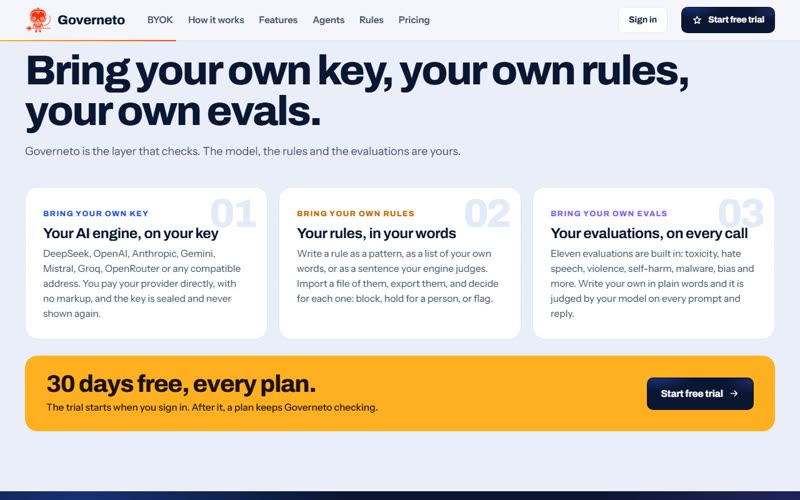
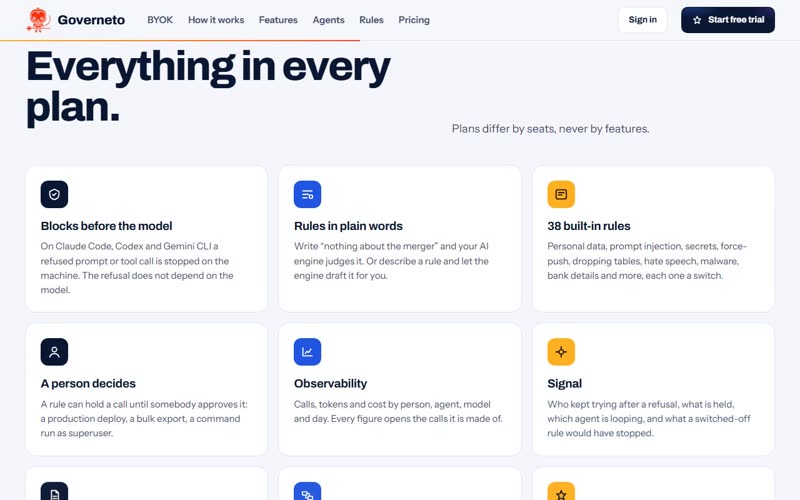
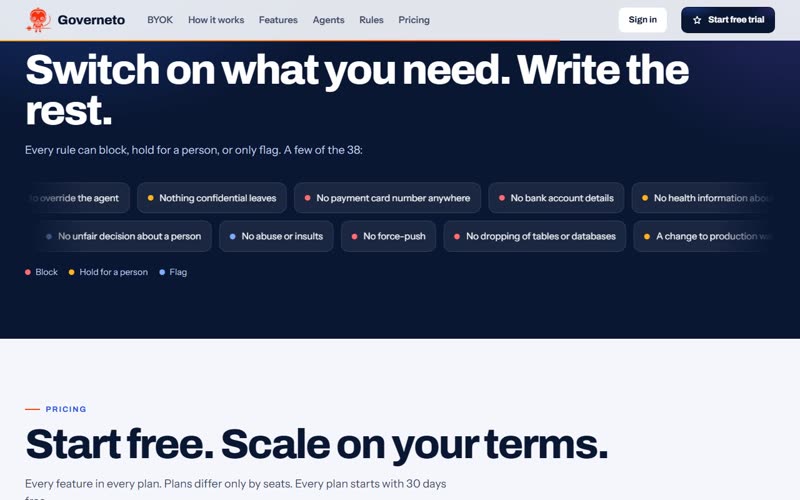
GovernetoEvery AI agent your people use. Observed, controlled, governed.
Established in 2024. Its consultants bring more than 30 years of combined experience, weighted towards the capabilities that are hardest to source across Salesforce, the open-source stack and applied AI.
Across the Salesforce platform, and the AI layer that now sits on top of it.
Agents, topics, actions and planner bundles. Custom Lightning Types for rich in-chat cards, metadata-driven tool registries, and writes gated behind approval.
Data streams, data lake and data model objects, identity resolution, contact-point modelling, calculated insights, and query from Apex.
Implementation and extension: objects and sharing, record pages, Flow, permission sets, data dictionaries, and change-controlled releases across five environments.
Quote configuration, tiered and stair-step pricing, quote-to-opportunity synchronisation, approval design, and deal-desk triage tooling.
B2B Commerce and CloudCraze, cart orchestration, and a managed accelerator moving catalogues, price lists and buyer groups from four platforms into Salesforce.
Sites and portals, community-user authentication paths, guest access, and offline-first field applications with replayable synchronisation.
Named and External Credentials, REST and SOAP, Metadata, Tooling, UI and Composite APIs, OAuth and JWT flows, and connected app configuration.
Namespace strategy, second-generation packaging, ancestry and in-place upgrades, scratch-org validation, security-review remediation and install guides.
Executive consoles with a real constraint engine, warehouse and query layer beneath, so a what-if is a re-run of the model, not a description of one.

Ten industries, most of them regulated.
Regulatory fees, summonses and payments, with change control across multiple environments.
Science and technology groups with governed data and strict access requirements.
Production agents, scheduling and quality, on a metadata-driven tool surface.
Catalogue, price list and buyer group migration, cart orchestration and marketplace order flow.
Enterprise platform work for data centre and connectivity businesses.
Regulated product organisations where traceability is not optional.
A full Data 360 build for a multi-practice claimant firm, identity layer included.
Multi-entity education groups with distributed administration.
Case management and service-health consoles at operator scale.
Subscription billing, CPQ and revenue operations tooling.
Enterprise end clients, and the technology partners OPNYX builds alongside.
End clients
Technology and delivery partners
Programmes delivered under a partner's engagement are described by sector rather than named.
An AppExchange package migrating a live commerce estate onto Salesforce from four source platforms, with mapping fully editable by the customer.
An agent whose entire tool surface is a metadata registry. Adding a capability is three files, with no planner edit and no dispatcher redeploy.
Data lake objects, an identity layer and ten usage models for a multi-practice firm, rebuildable into any fresh org with one idempotent command.
A regulatory-fee rename propagated across a controller, five record pages, two Flows, four layouts and seventeen tracked fields, with a runbook for environments outside the authorisation.
A single-page quote configurator with tiered pricing and staged deletions, plus a multi-object AI hub triaging records into three lanes.
The entire warehouse ships to the browser and the same view definitions execute there, so a figure on screen cannot drift from the pipeline.
AI work tends to fail quietly. The method is built against exactly those failures.
A status report is a table carrying a commit reference and a test result in every row.
A fabricated split always reconciles, so the parts are asserted rather than the sum.
Figures in a model's answer are recomputed from source before anyone sees them.
Every gate is deliberately broken and seen to turn red before it is relied upon.
Sharing, field-level security and permission-set parity form part of the change, not a later batch.
Where an earlier finding proves wrong, it is withdrawn in writing.
The regulated field rename. The package that keeps returning from security review. The demonstration that has to survive a chief technology officer opening the network tab.
hy@opnyx.com